Contents
Advertising pole dance classes in Australia is (of course) completely legal. The trouble almost never comes from the law. It comes from Facebook, Instagram, Google and TikTok, who use automatic systems to check ads and sometimes mistake a beginner pole class for adult content. Knowing how those systems think is what keeps your ads running and your account safe.
A quick note before we start: this is general information to help you plan, not legal advice. The rules on these platforms change regularly, so check the current version and get proper advice for your own situation.
The law is not your problem. The apps are.
There is no Australian law stopping you advertising legitimate pole, aerial or dance classes. You are running a dance business, and you are allowed to promote it.
What actually goes wrong is this: you pay to boost a post, and it gets rejected. Or your ad or Instagram account gets restricted with no clear explanation. Or a post that took you an hour to film quietly gets shown to almost nobody. This has been well documented and researched by Blogger on a Pole (you can read their research papers here).
It has happened to me too. I have also been shadow banned. I figured it out after realising my content was not showing under any hashtags. The difference is that I was posting just for fun, to connect with the pole dance community. Adult dance studios, pole dance studios, aerial artists and burlesque studios are posting to help promote their dance studio.
It is not the law impacting our accounts. That is a computer at Meta (the owner of Instagram and Facebook) or TikTok scanning your video, seeing skin, identifying a pole, and putting it in the wrong box. It is frustrating, it is unfair, and it is one we have to (and can) work around.
Meta's community guidelines
In 2026, Meta's community standards overlap with a robotic view of what the adult dance and aerial community actually posts. Two standards do most of the damage.
Adult nudity and sexual activity, which restricts:
- Photorealistic or digital imagery of adult nudity.
- Visible female nipples, except in a breastfeeding or act of protest context.
- Photorealistic or digital videos that focus on the crotch, female breasts or buttocks, recorded without the awareness of the person shown.
Meta's own wording: "We default to removing sexual imagery to prevent the sharing of non-consensual or underage content."
Adult sexual solicitation and sexually explicit language, which restricts:
- "Using slang terms for prostitution combined with any signal of a transaction for money or something of value, location, or contact information."
- Content that "engages in sexual solicitation by offering, asking or providing methods of contact for erotic dancing or stripping."
In practice, that means any content mentioning or showing stripping, especially next to an invitation to book a class (a "signal of a transaction for money or something of value, location, or contact information"), is at high risk of being restricted.
As a community it means we have had to get inventive:
- Using symbols to interrupt bots searching for the words strip or stripper (skrip, $tripp3r).
- Posting before and after performance moments rather than the performance itself.
- Posting practice run-throughs fully clothed.
- Covering female nipples with emojis.
What we see as consensual empowerment, personal expression and self-autonomy, an automated system sees as restricted and explicit material.
What trips the systems up
The pattern across Facebook, Instagram, Google and TikTok is roughly the same.
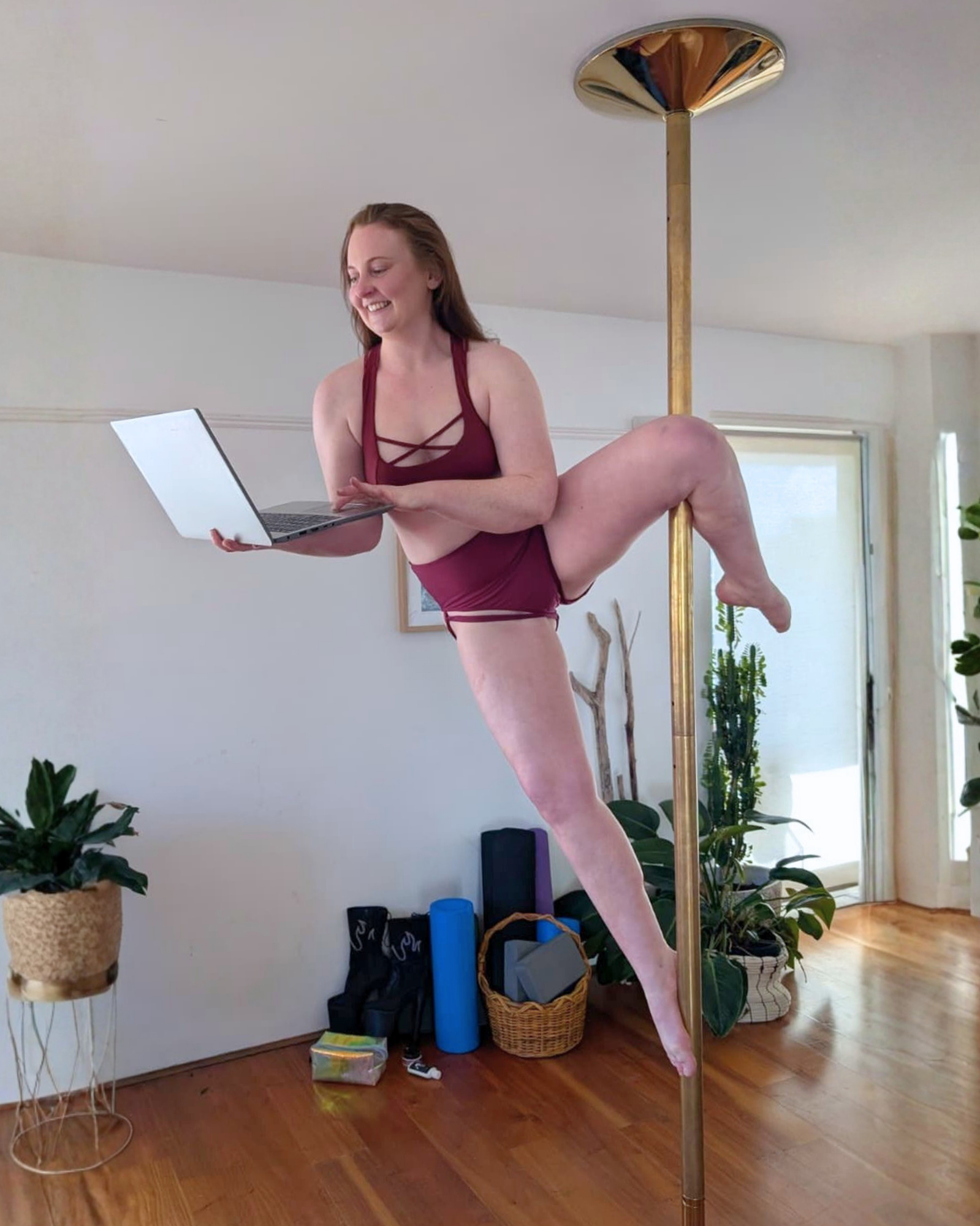
- Usually fine: longer clothes, athletic, instructional content. Someone learning a climb. A beginner class warming up. An instructor explaining how to grip. Anything that looks like a fitness lesson.
- Often flagged: heels and exotic content, slow camera work over the body, more skin and minimal coverage.
- Flagged nearly everywhere: female nipples, mentions of stripping, very small outfits.
To be clear, there is nothing wrong with expressing yourself that way. It is simply that an uninformed computer reads it as the adult content the filter was built to catch. That does not mean you have to stop posting those styles. It means being strategic about how and where you put them.
The simple rule that keeps you out of trouble
Split your content by where it is going.
- Anything you pay to promote (boosted posts and ads): keep it more clothed, athletic and instructional. This is where the filters are strictest and where the consequences are worst, because a restricted ad account is a real headache to get back.
- Your normal, unpaid posts: you have much more freedom here. This is where the fuller range of what you teach can live, including heels and exotic. Even so, plenty of accounts have still been banned for this type of content, so balance it with some winter content: long leggings, jumpers, empty studio shots. That keeps you out of the restricted content bin.
- Your website: plain, clear, accurate descriptions of every class you run, with all the images and video you like. No filters to worry about, and it is what helps Google and AI tools understand what you actually offer. That side of things is what the Found package handles.
Promote the athletic story where the rules are tight. Show the full art form where you have room.
Want a plan for what goes where?
The Content package maps out your posts month by month and hands them to you ready to go, split by what is safe to boost and what belongs on the grid.
See the Content packageWhere the government actually steps in
Advertising your dance studio does overlap with the law when it comes to promising what you can and cannot offer. Here are the things to look out for.
Do not promise things you cannot deliver. "Drop a dress size this term" is both dodgy and attracts the wrong student. "Build real strength and learn to trust your body" is honest, and it speaks to the person who is actually going to stay.
Advertise the class you actually run. Keep your timetable up to date. If you use an old timetable to promote current classes, or name an instructor who is no longer teaching, students can reasonably feel misled about what they bought.
Say clearly that classes are for adults. It protects you and sets the right expectation. Anyone working with people under 18 needs a mandatory background check to screen them for suitability, called a Working with Children check or card in most Australian states (ACIC, retrieved 2026).
Get permission before you use a student's face. This one genuinely matters, both ethically and practically. Add a line to your intake form asking whether you may use photos and video of them in your marketing, with a simple yes or no. Keep the record. If someone says no, honour it, including in the background of other people's videos.
If an ad gets rejected
It happens to nearly every business. I have had ads flagged for animal abuse when promoting an early bird sale.
Do not panic, and do not immediately try to sneak the same ad through again, because repeated rejections are what escalate into account restrictions.
Instead:
- Read the reason given, even though it is usually vague.
- Swap the video or image for something more clothed and instructional, and try that.
- Keep your ad wording plain and class-focused, so the text is not adding to the problem.
- If you believe it was wrong, use the appeal or review option rather than reposting.
The short version
Advertising your studio in Australia is legal. Your real job is staying on the right side of each app's content rules and being honest about what you offer. Keep anything you pay to promote clothed and instructional, then link to your website, where it can all be out (pun intended). Beyond the platform rules, get permission before using student faces and describe your classes accurately.
Do that, and your ads stay live and your account stays healthy.
Want a plan for what goes where? The Content package maps out and provides your posts ready to go, month by month. And if any word here was new, the glossary explains marketing terms in plain English with studio examples.